

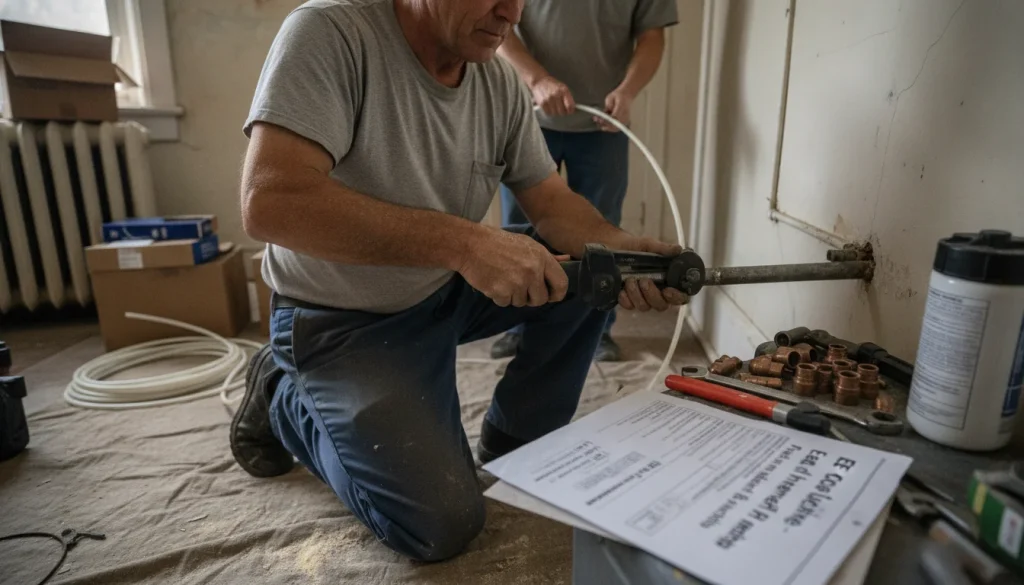
A ceiling stain appears after a quiet night. One patch of floor feels unusually warm. Your water bill climbs without explanation. Many Los Gatos owners face the same moment and wrestle with a core decision: repiping vs spot repairs.
Executive summary: This comparison explains how to weigh short-term fixes against a whole-system replacement. You’ll learn the signs to watch for, how pros diagnose issues, what materials and codes imply for lifespan, and when a planned repipe in Los Gatos delivers better long-term value than repeat plumbing repair visits.
Key Takeaways
- Repiping addresses system-wide risks; a spot repair handles a single fault.
- Decide using pipe age, leak history, water chemistry, access, and future remodel plans.
- Lifetime cost includes repeat calls, water damage risk, and downtime—not just today’s invoice.
- Material choice (copper, PEX, CPVC) and local code affect durability and compliance.
- Staged planning can keep at least one bathroom usable during larger projects in Los Gatos homes.
Los Gatos Plumber works across Los Gatos every week, helping owners compare options. This guide covers the signs, diagnostic tools, code requirements, timelines, and long-term value so you can choose with confidence in California and throughout the greater Los Gatos area.
Table of Contents
- Repiping vs spot repairs: what each option really means
- Warning signs and diagnostics before you decide
- Costs that matter: upfront vs lifetime total cost of ownership
- Materials, code compliance, and expected lifespan
- Decision framework: when repiping wins and when repairs make-sense
- Project logistics, timelines, and level of disruption
- Insurance, warranties, financing, and ROI
Repiping vs spot repairs: what each option really means
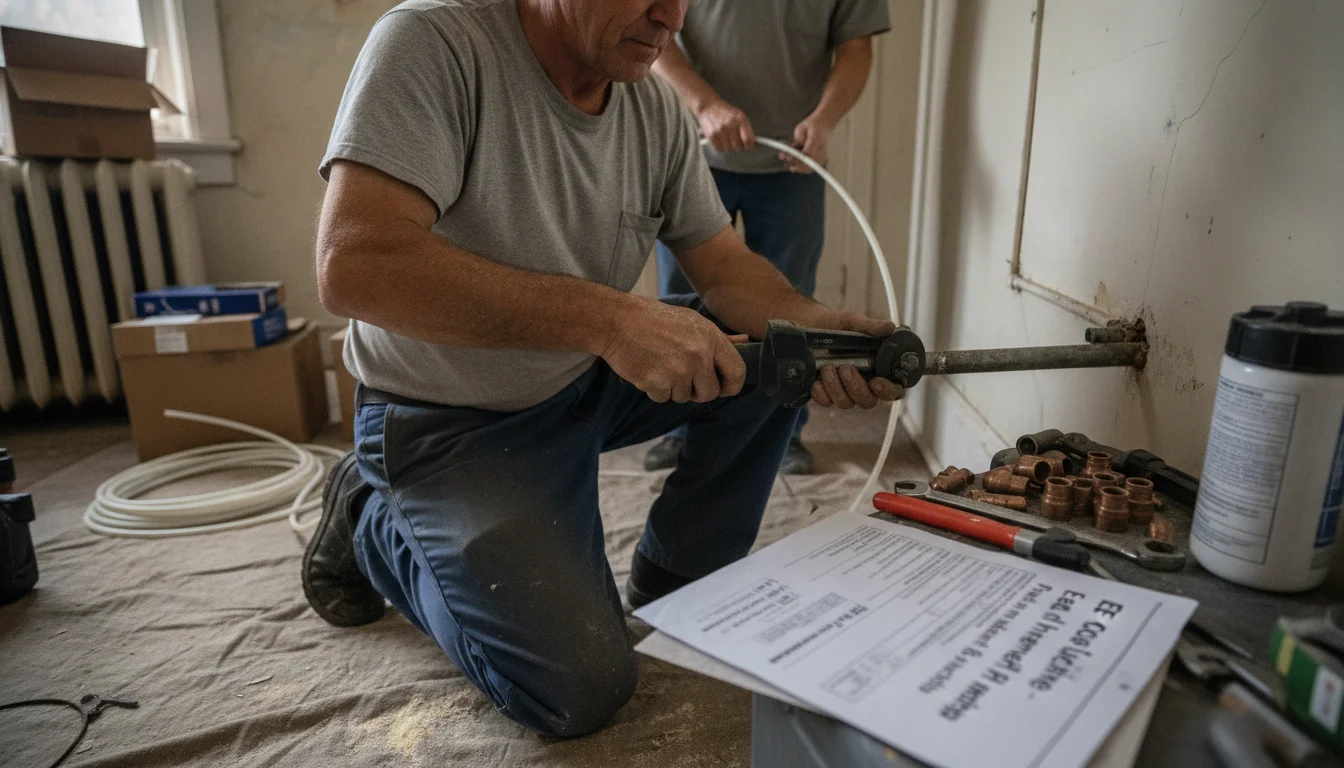
A repipe is a planned replacement of supply piping across a home or building. It typically includes new shut-offs, updated supply lines to fixtures, and proper straps. Crews open small wall or ceiling areas, route new lines, and cap or remove old ones. The result is a fresh system with steadier pressure and cleaner water.
A spot repair is a focused fix at one leak or failing section. The plumber exposes the area, removes the damaged pipe or fitting, and installs new components. This may involve a short run of pipe, a coupling, or a valve. The purpose is to stop one problem quickly with minimal access work.
Both paths use licensed methods and code-approved materials. The key difference is scope. Repiping addresses age- or material-driven system risks, while a repair handles one pinhole, break, or loose joint. If leaks continue to appear, a single repair can become a pause button rather than a solution.
For many owners in Los Gatos, the choice affects day-to-day life. Can you handle more visits for recurring issues, or is a single, planned project the better route? Los Gatos Plumber can walk you through the pros and cons for your layout, fixtures, and water demands.
What a full repipe includes
A full repipe maps the system, plans routes, and protects finishes. Crews establish dust control, shut off water in blocks, and open precise access points. They run new lines, pressure test, sanitize, and restore surfaces. Expect new angle stops, supply tubes, and proper supports. Old galvanized or thinning copper is isolated and taken out of service.
What counts as a spot repair
Common repairs include fixing a pinhole, rerouting around a slab leak by running lines above grade, or replacing a failed valve. Limits appear when leaks repeat, pipe walls thin, or corrosion spreads. In those cases, continuing to patch can raise risk and disruption over time.
Warning signs and diagnostics before you decide
Plumbing often signals trouble before a failure. Watch for rusty or green stains on fittings, frequent pinholes, or persistently damp drywall. Sudden pressure drops, cloudy or metallic-tasting water, and erratic hot-cold swings also suggest problems. Age matters: older galvanized lines corrode internally, while copper can pit from water chemistry and velocity.
Leak patterns tell a story. One isolated leak near a water heater may be due to localized heat stress. Multiple leaks across different rooms point to system age. Slab leaks often appear as warm spots on floors, running meters with fixtures off, or baseboard swelling.
Pros verify hidden issues with tools. Acoustic leak detection listens for the distinct sound of escaping water. Thermal imaging highlights heat from hot water lines or moisture in walls. Pressure testing confirms whether lines hold at set levels. Dye and moisture meters help trace stains on ceilings and floors.
For water quality, licensed plumbers can review city reports and test at the tap. If you have lead service concerns, follow local rules and guidance from the EPA on lead and copper in drinking water, which explains sampling and risk control steps (EPA Lead and Copper Rule).
If you face an active break, use Emergency Plumbing right away. Shut off the main, open low taps to drain, and keep people clear of wet areas. For standing water or a constant meter spin, Leaks & Burst Pipes is the right service.
How pros verify problems
- Acoustic listening: Finds pressurized leaks behind finishes.
- Thermal imaging: Maps hot lines and damp zones.
- Pressure testing: Confirms tightness before closing walls.
- Endoscopic cameras: Inspect accessible chases and voids.
- Water tests: Check pH, hardness, and metals that drive corrosion.
Costs that matter: upfront vs lifetime total cost of ownership
Total cost of ownership encompasses the full expense over the life of your choice. In plumbing, this includes the initial repair, any repeat calls, damage from future leaks, and time lost during work. It also covers finish repairs, access, and any upgrades needed for code compliance.
A single fix typically costs less upfront than a whole-home project. But long-term math can flip if leaks keep coming. Multiple service visits, drywall openings, repainting, and days without water add up. A planned repipe groups access, testing, and restoration into one organized window.
Look beyond the next hour. Consider the next five to ten years. Does pipe age suggest more faults soon? Are you planning a remodel that will open walls anyway? Pairing projects can reduce disruption and avoid paying twice for restoration.
Hidden costs matter. Water damage can affect framing, floors, cabinets, and insulation. Mold growth can trigger removal of wet materials and specialized cleaning under containment per industry guidance such as the IICRC S500 water damage standard (IICRC S500 Overview). Business settings face downtime risk, lost revenue, and tenant impacts.
When you compare repiping vs spot repairs, list the soft costs too. Time off work, moving furniture, and the impact of limited bathroom access all change the lived cost of a plan in Los Gatos and nearby neighborhoods.
What to consider beyond the invoice
- Damage risk: One leak in a kitchen can impact many finishes.
- Repeat access: Patching the same wall repeatedly gets old fast.
- Scheduling: One planned window vs many urgent visits.
- Insurance: Understand limits on gradual leaks before you decide.
Materials, code compliance, and expected lifespan
Pipe material shapes longevity and performance. Copper is durable and heat-resistant, with clean exposed runs. It can pit in aggressive water and requires skilled soldering. PEX is a flexible plastic that curves through tight spaces, needs fewer fittings, and tolerates freeze expansion better than rigid pipe; it must be protected from sunlight and heat.
CPVC is a rigid plastic rated for hot water; it solvent-welds, resists corrosion, and needs correct support to avoid brittleness under stress. Old galvanized steel corrodes internally, restricting flow and discoloring water—these lines usually call for replacement, not patching.
Local code sets rules for materials, supports, valves, and tests. Many US jurisdictions follow versions of the International Plumbing Code or Uniform Plumbing Code. Your plumber will pull permits, perform pressure tests, and install proper shut-offs and water hammer arrestors where required. Manufacturers also publish installation guides and warranty terms.
Water chemistry and pressure matter. High static pressure can strain joints and valves, sometimes necessitating a pressure-reducing valve to keep levels within range. Aggressive water can accelerate corrosion. Pros can run tests and recommend a best-fit material for your block and the age of your building in Los Gatos.
For lead concerns in older homes, consult EPA guidance on lead in homes and plumbing components for test methods, fixture choices, filters, and replacement steps (EPA Lead in Homes). Always choose third-party listed materials and follow code.
Expected service life at a glance
- Copper: Long life with proper sizing and chemistry.
- PEX: Long life; fewer fittings reduce potential leak points.
- CPVC: Solid option where allowed; protect from impact.
- Galvanized: Near end of life in many older homes.
Decision framework: when repiping wins and when repairs make sense
Start with age and failure rate. If your home has multiple leaks in a short time, a repipe may be wiser than more patches. If lines are newer and the failure is tied to a single event or fitting, a spot repair can solve it. Match the fix to the cause, not only the symptom.
Think about timing. If you plan a kitchen or bath remodel, add a repipe to that scope. Walls will open anyway, reducing repeat dust and finish work. If you just remodeled and a valve failed, a targeted repair can protect your new tile.
For families, water access matters. A repipe can be staged so at least one bathroom stays live most of the day. Repairs are usually faster, but frequent visits can still disrupt meals and showers. The right plan balances speed with peace of mind.
Commercial and multifamily spaces have different stakes. Leaks affect many users. Downtime can mean lost income, rent credits, or code issues. A planned repipe during low-use windows can lower risk. Spot repairs still help with isolated fixtures, such as a single unit’s angle stop or a mechanical room valve.
Use this simple flow:
- Map leaks over time. Many zones? Consider repiping.
- Check material and age. Old galvanized or thinning copper? Repiping is likely.
- Review water quality and pressure. Aggressive water? Choose materials accordingly.
- Align with remodels. Open once, finish once.
- Confirm access. Complex chases often favor flexible PEX routes.
Residential vs. commercial triggers
- Residential: Two or more leaks in a year, discolored water, and old materials point to replacement.
- Commercial/multifamily: Occupancy, fire-life safety, and downtime costs favor planned replacements.
Project logistics, timelines, and level of disruption
Repiping is organized work. Expect a site walk, permit pull, and an access plan. Crews lay down protection, set dust control, and cover furnishings. Water is off in scheduled blocks, not continuously. Lines are routed, strapped, and pressure-tested. Surfaces are closed and patched after inspections. Final steps include flushing and sanitizing lines.
Most single-family repipes take several days, depending on square footage and access. Multi-story homes, complex chases, and plaster ceilings can extend the timeline. With good planning, at least one bathroom can often remain operational most of the day. Many Los Gatos homeowners can stay on-site if they can tolerate brief water-off windows.
Spot repairs are quick and targeted. The plumber locates the fault using acoustic tools or thermal imaging, isolates the section, and opens a small area. After the fix, they test and dry the cavity. Drywall and paint follow. In many cases, the entire visit is completed the same day.
If a pipe bursts, shut off the main immediately. Open a low tub spout or hose bib to drain lines. Move belongings out of wet zones. For electrical safety, avoid standing water. Call Emergency Plumbing for rapid response, then schedule Leaks & Burst Pipes for testing and restoration as needed.
Garbage Disposal Repair, Kitchen Plumbing, and other fixture services can be bundled after a repipe to set kitchens and baths up properly. Coordinating supply lines and fixtures together helps you avoid installing new fixtures over aging lines.
What to expect from crews
- Clear schedule: Daily start and stop times.
- Containment: Floor and dust protection.
- Testing: Pressure tests before close-up.
- Updates: Straightforward notes on progress and next steps.
Insurance, warranties, financing, and ROI
Home and business insurance often treats sudden and accidental discharge differently from slow, ongoing leaks. Coverage for the break, access, and build-back varies by policy. Many policies exclude long-term seepage. Document damage with photos and keep reports. The Insurance Information Institute outlines common water loss categories and claim tips (III Water Damage Basics).
Contractors offer workmanship warranties, and manufacturers back materials when installed to specification. Ask what is covered and for how long. Keep records of permits, inspections, and pressure tests—helpful for future sales and any insurance claims.
Payment approaches differ by contractor and project size. Some owners phase work, addressing the worst zones first. Others combine repiping with renovations to reduce overall downtime. Long-term value is reflected in fewer leaks, cleaner water, and stable pressure. Buyers often prefer homes with newer systems and clear documentation in Los Gatos.
Frequently Asked Questions
What should I do first when a pipe bursts?
Turn off the main water valve. Open a low faucet to drain lines. Protect power sources from water. Move items from wet areas. Call Emergency Plumbing for rapid help, then schedule Leaks & Burst Pipes to inspect and repair the system.
How do I know if a small fix is enough?
If pipes are newer and the leak is clearly tied to one joint or valve, a spot repair can make sense. If you’ve had repeat leaks in different rooms, discolored water, or low pressure from old lines, repiping often addresses the root cause.
Which pipe material lasts the longest?
Copper, PEX, and CPVC can all last many years when installed correctly and matched to your water quality. Galvanized steel is often near end of life in older homes. A licensed plumber will match material to code, pressure, and layout.
Will insurance cover a repipe after a leak?
Policies vary. Many cover sudden breaks but exclude long-term seepage. Some include access and build-back; others do not. Save photos, repair invoices, and inspection notes. Call your carrier to confirm details before starting major work.
How do I find reliable pipe repair near me?
Look for a licensed, insured plumber with strong local reviews and clear warranties. Ask about diagnostics, permits, and materials. Los Gatos Plumber can inspect, pressure test, and explain options, from targeted pipe repair to a full repipe.
Key takeaways
- Match the fix to the cause, not the symptom.
- Count lifetime costs, not just today’s visit.
- Choose materials that fit water chemistry and code.
- Plan work with remodels to limit disruption.
- Document everything for insurance and resale.
Conclusion
Choosing between repiping vs spot repairs is ultimately about risk, timing, and day-to-day convenience. A targeted fix can stop one leak quickly, while a planned repipe can end a cycle of hidden damage and surprise visits. Across the Los Gatos area—from Downtown Los Gatos and Blossom Manor to Monte Sereno, Cambrian, Saratoga, Campbell, and surrounding neighborhoods—Los Gatos Plumber helps owners weigh options with clear steps and licensed work. Contact us
If you are not sure which of these you are dealing with, it is worth having someone look at it before it turns into a bigger job. Get in touch with Los Gatos Plumber today and we will tell you where you stand.